American Museum of Natural History (AMNH)
Arachnology Research Lab
- Information architecture
- Front-end development
- Brand identity
- Design systems
- UX engineering
Overview
The AMNH Arachnology Lab requires a public-facing digital ecosystem to secure institutional funding, attract global research talent, and communicate policies to lab visitors. The central objective was to identify user needs to create an optimal hierarchy of readily accessible information for financial supporters, potential lab members, and industry colleagues.
Challenge
Stakeholder interviews and contextual inquiries revealed that the core problem extended beyond the public-facing site to the internal administrative burden. A reliance on limited museum IT resources made content updates incredibly difficult, leading to outdated information and a high volume of redundant logistical inquiries from prospective researchers and visitors.
Solution
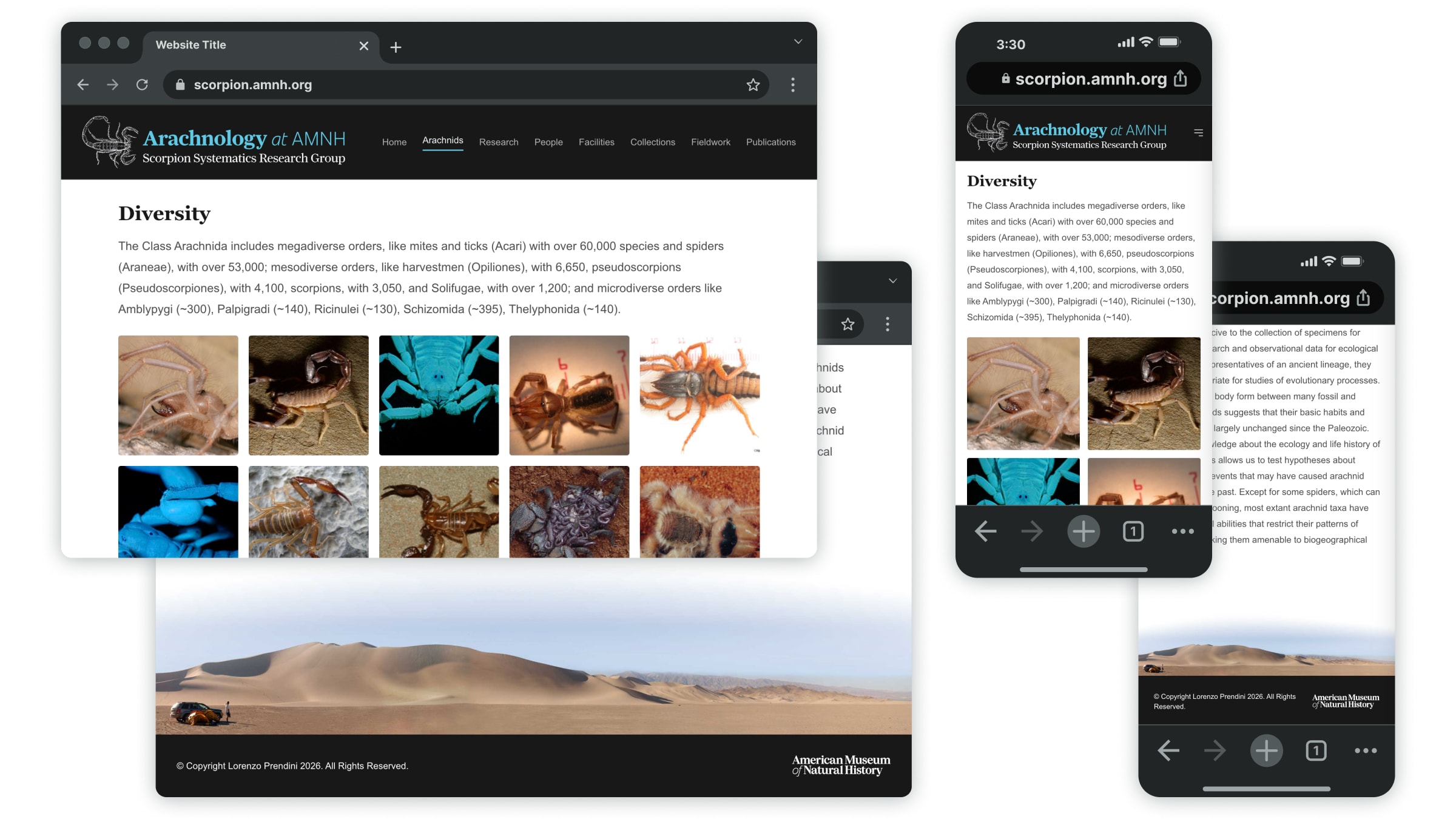
Directed end-to-end UX research, institutional rebranding, and front-end development to deliver a vastly improved web presence built on a Next.js React framework. Restructuring the information architecture and separating complex layouts from content generation empowers internal administrators to manage data autonomously while providing an accessible user experience for the global scientific community.
Role
I was the sole Experience Designer and Front-End Developer on this freelance project, supporting the lab curator, collection manager, and end users. I collaborated with museum IT staff and design department stakeholders.
01 / User Research & Operational Empathy
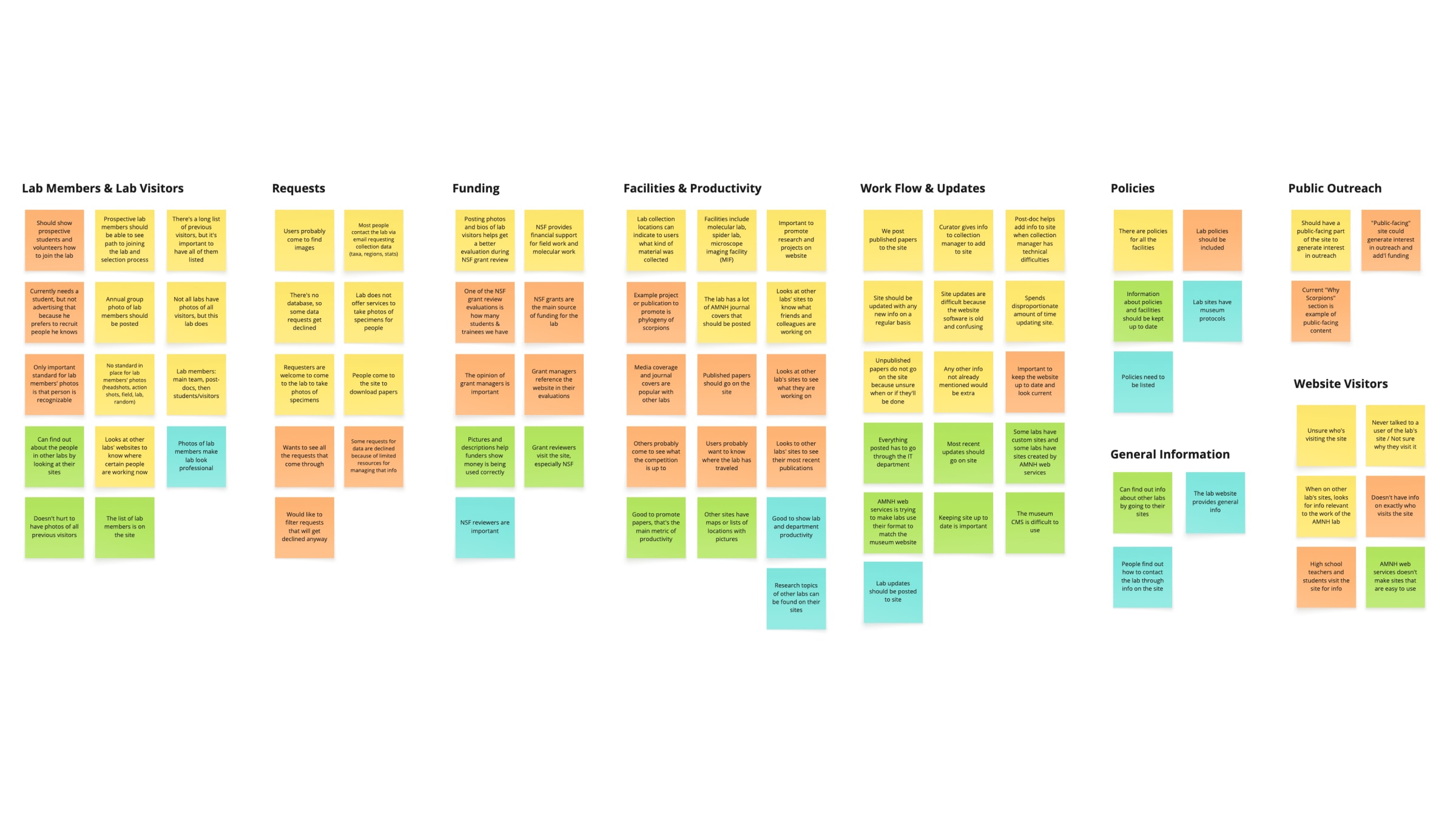
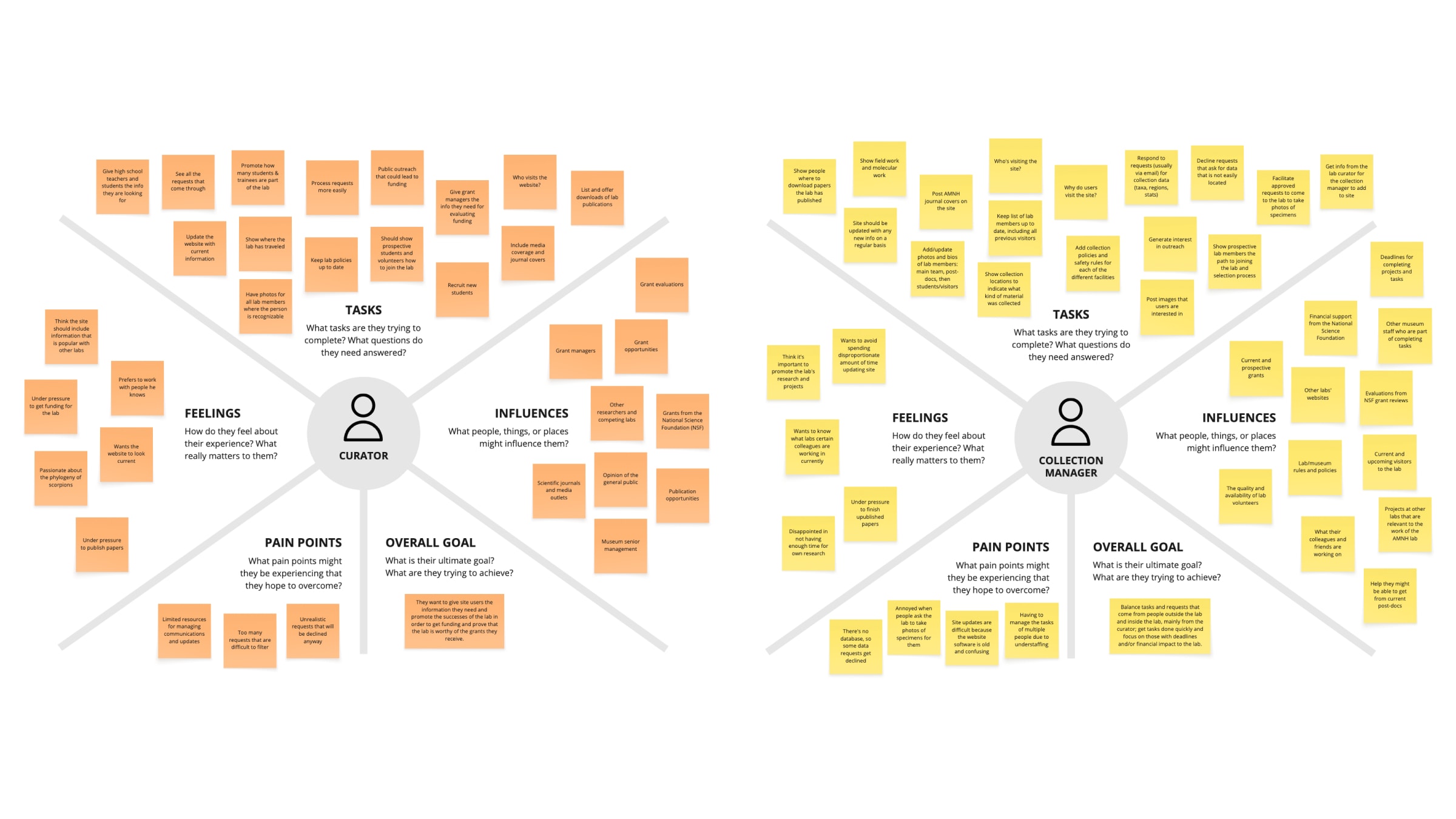
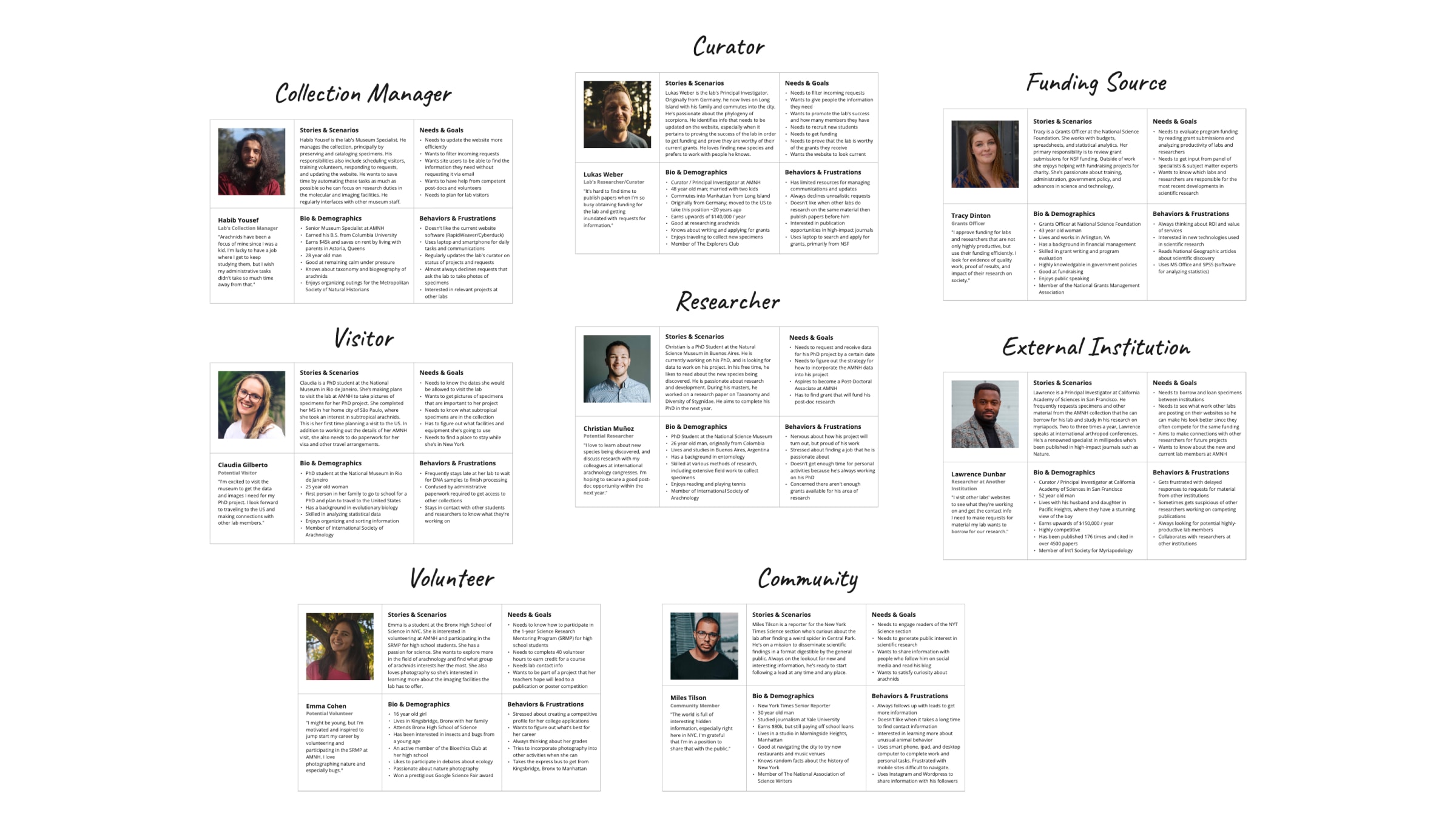
Synthesized stakeholder interviews and contextual inquiries to map the operational workflows of the lab's curator, collection manager, and auxiliary staff. By utilizing empathy mapping and constructing a persona ecosystem, the strategy shifted to prioritizing the internal administrator as the primary user, which indirectly solves the communication and logistical needs of external personas.
Internal Persona Development
Focused the first iteration on the website admin (the lab's collection manager) to streamline administrative tasks and improve site maintenance velocity.
Contextual Inquiry Integration
Shadowed lab staff to understand how they update information and research other institutions, identifying systemic bottlenecks in the legacy workflow.
Targeted Problem Framing
Reframed the design problem around internal efficiency, recognizing that empowering admins to easily update the site directly serves the needs of funding sources and prospective lab members.
02 / Architectural Taxonomy & Content Hierarchy
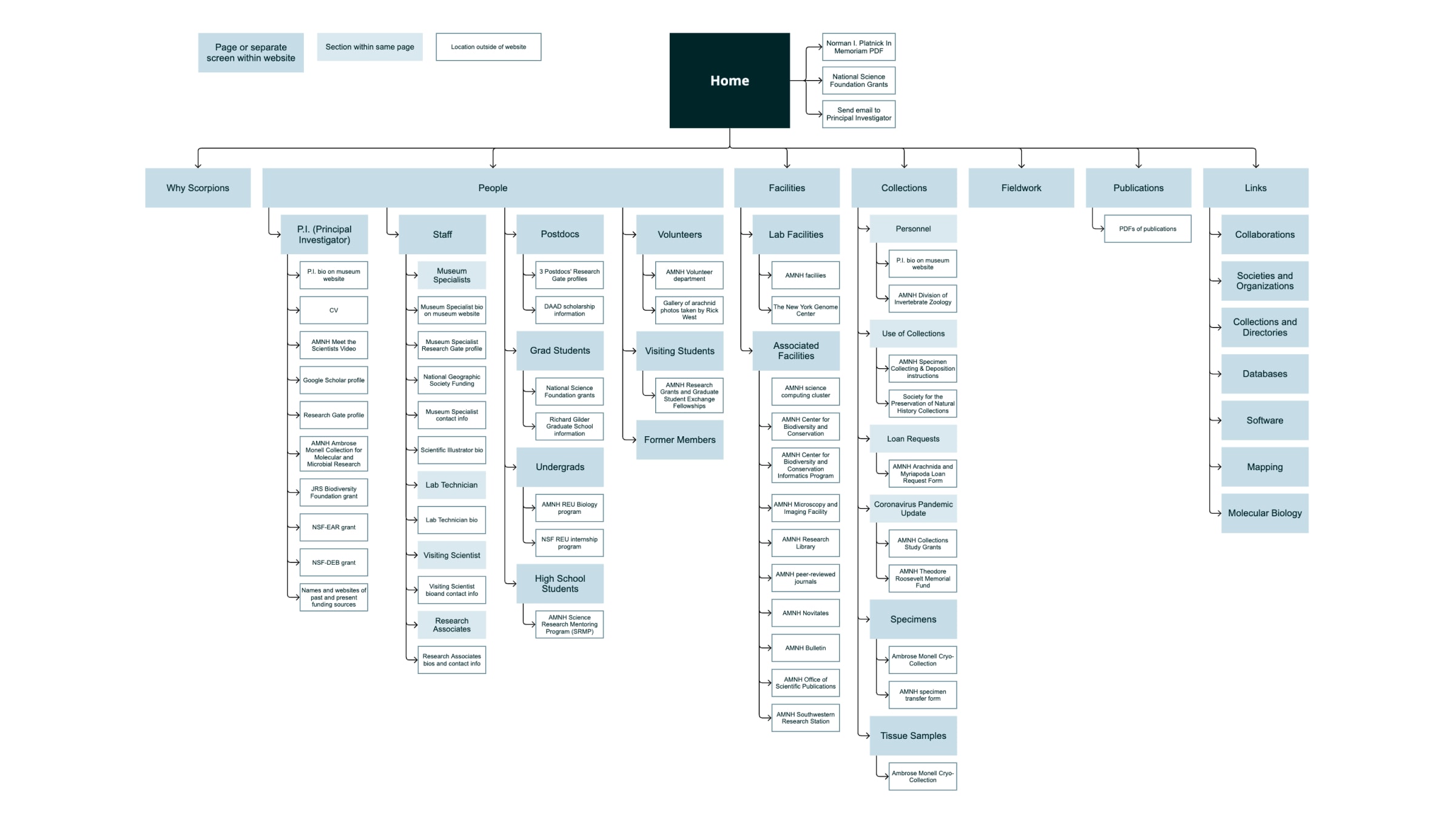
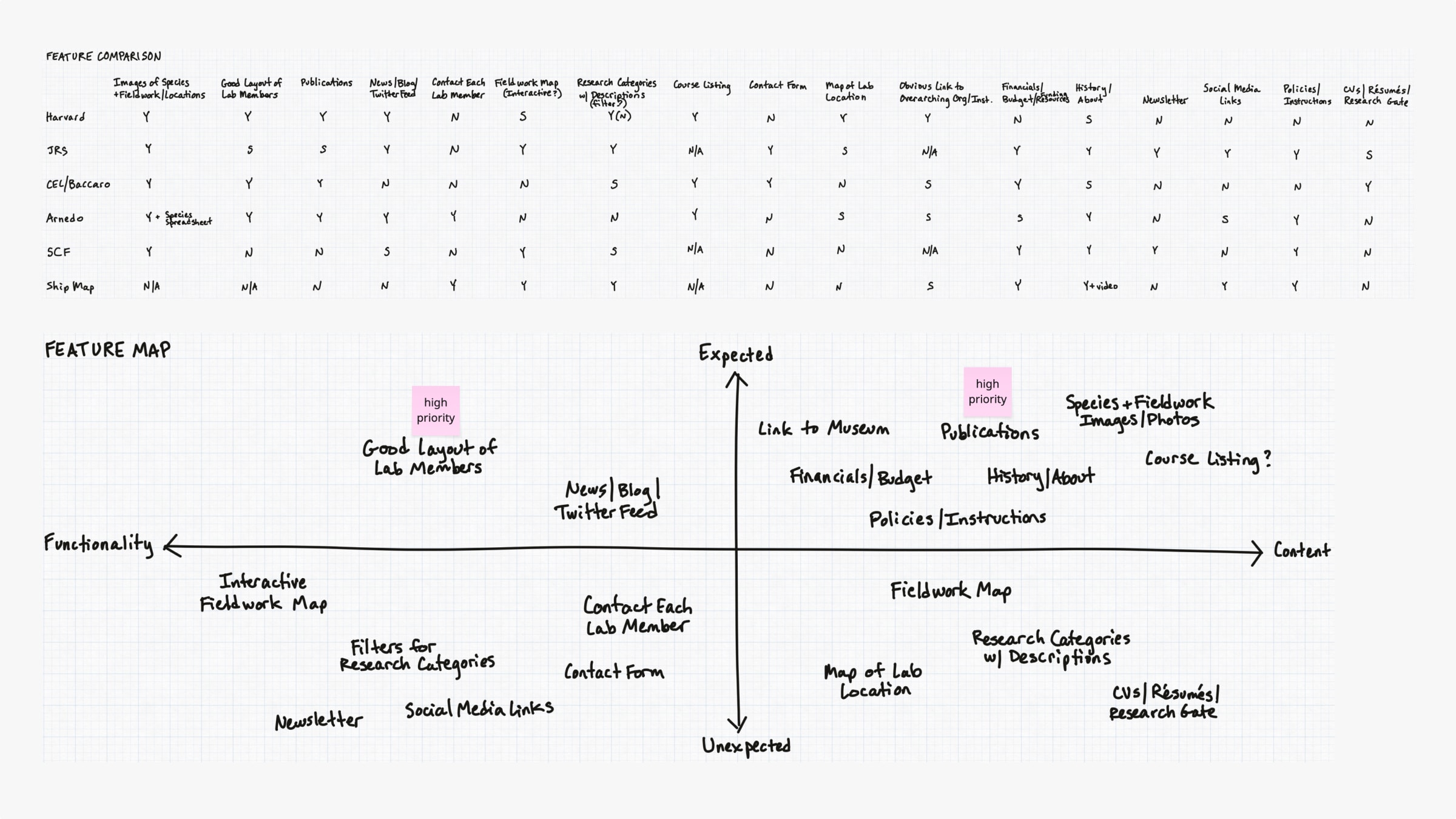
Executed a comprehensive architectural deconstruction of the legacy site alongside comparative analyses of direct and indirect institutional competitors. This informed a streamlined taxonomic hierarchy that surfaces critical publications, lab policies, and personnel updates while filtering out redundant feature bloat.
Competitive Feature Auditing
Analyzed competitor labs to define expected user mental models, ensuring high-value content (publications, lab initiatives, current members) is prioritized over unnecessary features (interactive maps, social media integrations).
Legacy Content Deconstruction
Restructured the original, highly fragmented sitemap into a clean, accessible layout that reduces cognitive load for visiting researchers.
Proactive Redundancy Reduction
Designed the hierarchy to make common logistical information instantly locatable, specifically aiming to decrease redundant administrative inquiries.
03 / Institutional Branding & Visual Identity
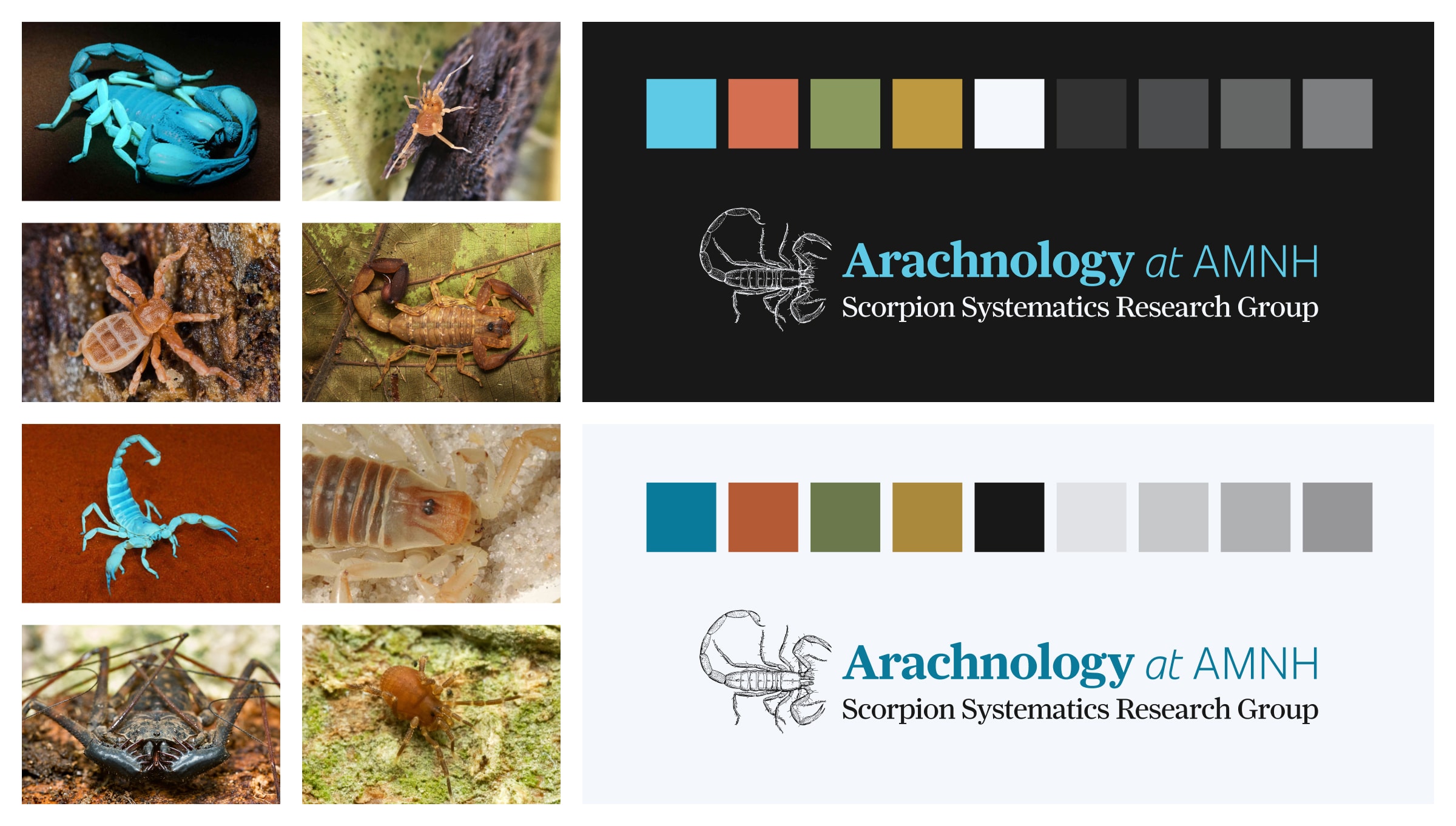
Navigated unique institutional design guidelines to establish an independent yet aligned visual identity for the arachnology lab. The visual strategy successfully adhered to the AMNH design department's requirement for curatorial lab branding having a distinct, highly recognizable presence apart from the museum.
Specimen-Derived Palettes
Refined the color palette to depart from standard museum brand colors, extracting authentic, arachnid-related hues directly from photos of field specimens.
Scientific Illustration Integration
Incorporated a precise scientific illustration to maintain a rigorous academic connection to the lab's scorpion systematics research.
Institutional Alignment
Satisfied curator's requirement to maintain structural ties to the museum collection through the rebranding of the lab as "Arachnology at AMNH" while establishing a distinct, memorable identity for the specific curator-driven lab.
04 / Front-End Engineering & Autonomous Governance
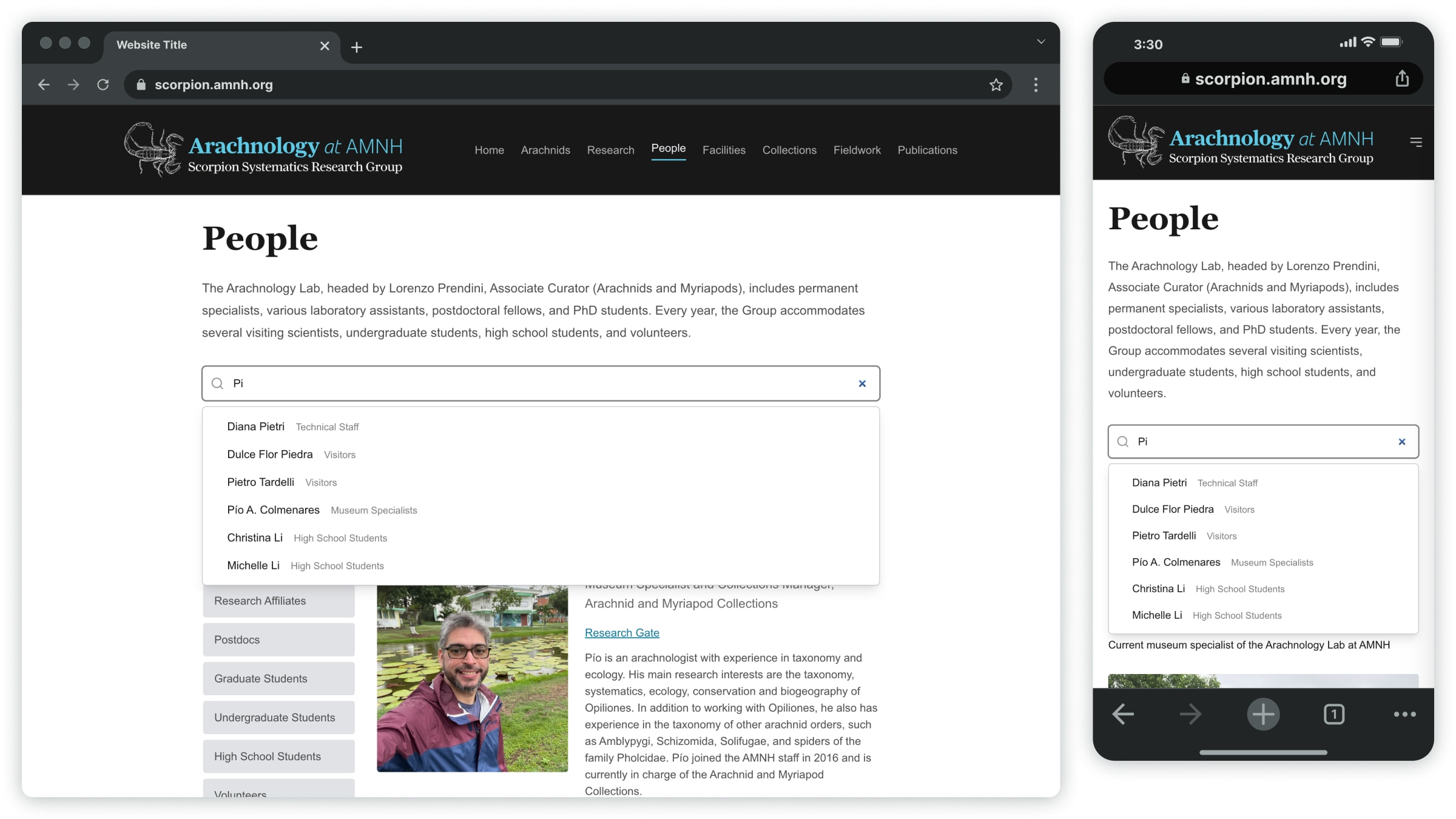
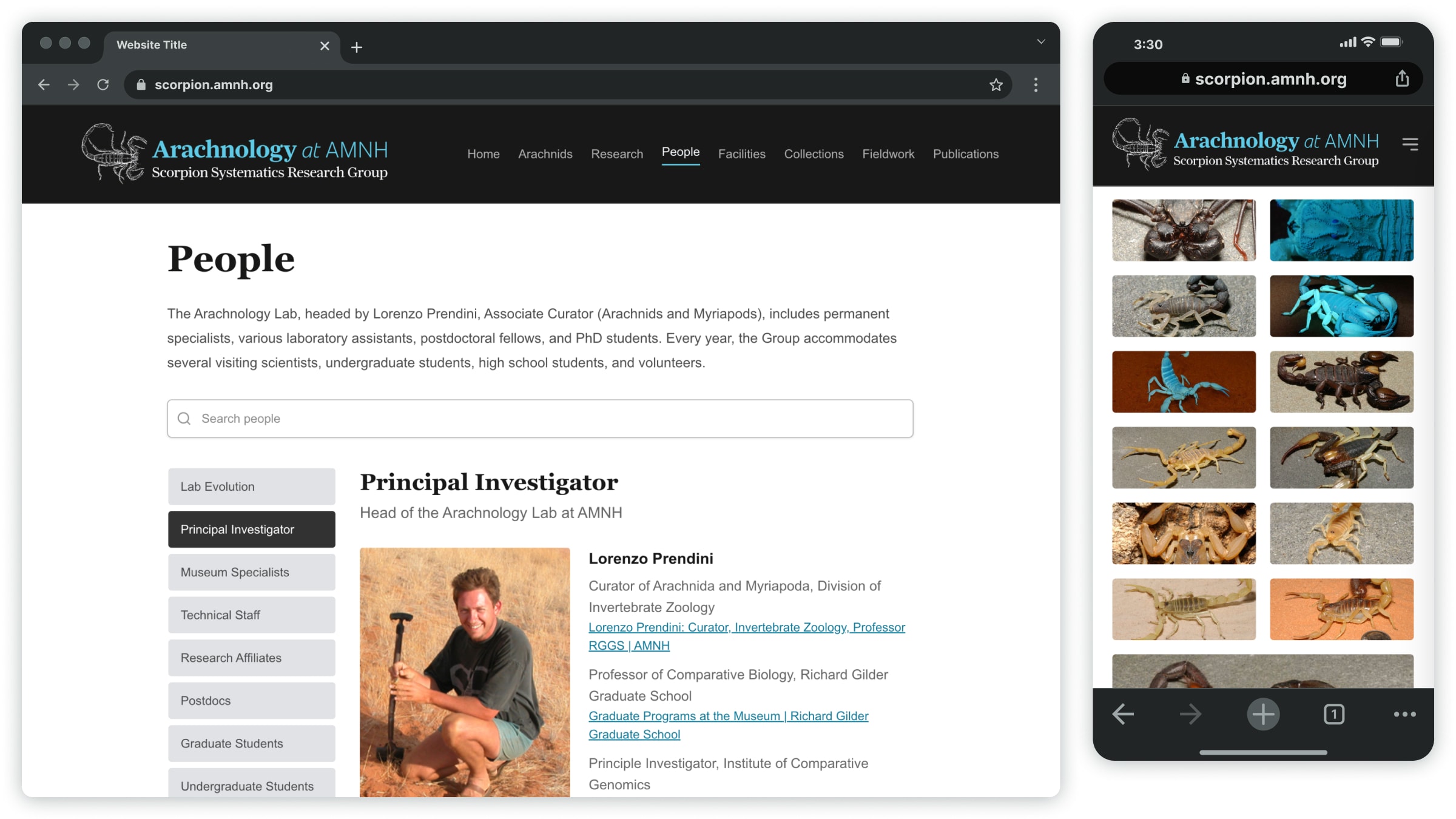
Engineered a modern Next.js React application that explicitly decouples presentation layouts from content management. Created a searchable lab member directory. Collaborated with museum IT to securely connect the established AMNH web address to the new infrastructure.
Decoupled Architecture
Built a Next.js site to cleanly separate content from layout code, ensuring the site is CMS-ready and lab admins will be able to update the site without touching design files or needing coding knowledge.
IT Bottleneck Resolution
Paired with AMNH IT to redirect the legacy AMNH URL to an independent hosting infrastructure, giving the lab autonomous update capabilities.
Scalable Content Directories
Delivered a responsive, production-ready website that dynamically renders complex lab member directories and access to scientific publication downloads with high performance and searchability.